“Validation” is a cultural buzzword right now. One of the upsides of our tech-savvy world is that we have an increasingly far-reaching glimpse into others’ lives–our perspective can wonderfully broaden in the process. While there’s a definite dark side to the digital realm (desensitization, nationalism, oversaturation, overstimulation, etc.), there are some good aspects of hyper-connectivity and I’m calling this one of them.

Here’s the thing though. Validation is easily misunderstood, so I want to start by clarifying my (non-clinical, layman-level) definition of validity.
What’s Valid?
If you approached me in tears and confessed that you feared you would go blind, I would take that concern seriously (as any good friend would). We are human, and we usually expect a compassionate response from a trusted friend, and that is because we can empathize with enduring terrifying moments.
If the situation allows for it, I might ask some clarifying questions after taking time to listen. As a friend, I’d wonder:
- Did your eye doctor indicate there was an issue?
- Has your vision deteriorated recently?
- Did something scratch your cornea?
None of those facts make your fear more or less valid. Fear is fear, and while I personally believe there is a biblical precedent for commanding emotions, there’s a difference between standing on Scripture and standing on a smooshed pile of emotions we don’t want to address.
So stuffing emotions doesn’t help, and apparently: neither does criticizing ourselves for having those uncomfortable emotions. Instead, I encourage you to try acknowledging that they are there. If we look at emotions as leaves on a tree, we can start to figure out what the stem and root of them is–what’s really going on.
“Just Stop Being Afraid”
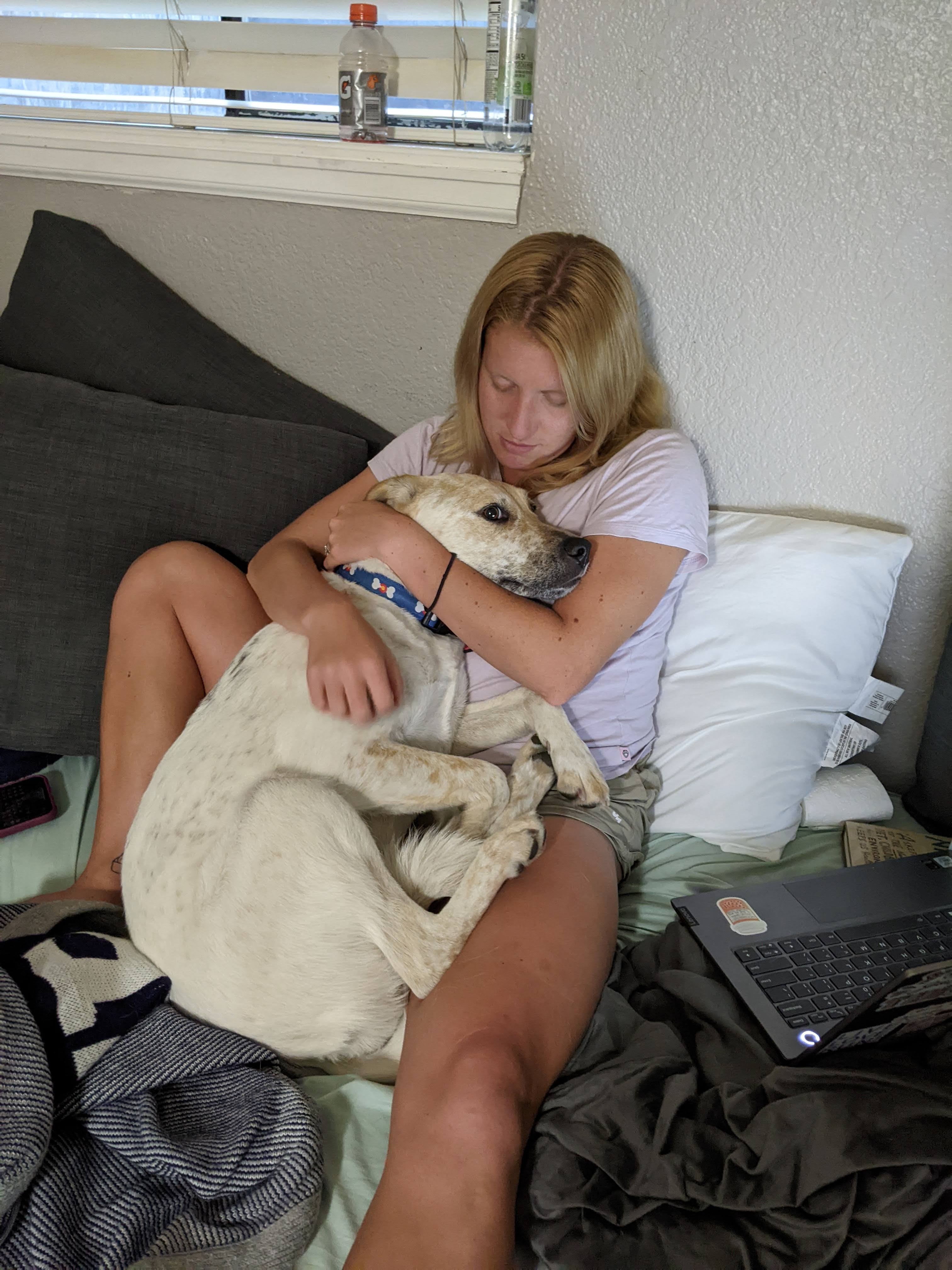
Recently, we experienced a string of bad storms near our home. We quickly learned that our new dog is terrified of them–especially the bright flashes of lightning and the hail pummeling our windows. On a particularly bad evening, she was huddled in the corner of the room, shaking, as it neared 10 p.m. Since I couldn’t sleep either, I couldn’t help but hear her whimper.
There’s a difference between standing on Scripture and standing on a smooshed pile of emotions we don’t want to address.
Whether you’re a dog person or not, what happened next is important to grasp. I felt the Lord speak a question to me: “What would I do?” And I knew immediately. I gathered my pillow and moved to the floor next to her. When that didn’t work, we migrated to the bathroom floor–I’d recently cleaned it and it was the best choice because there are no windows, in case you’re wondering. She and I curled up on the hard floor for a few hours before her little body calmed enough to sleep.

The experience was oddly profound, and there are a few key things I learned that evening:
- I wasn’t angry that my schedule was disrupted: So, I normally get easily anxious and frustrated when out of routine. In this situation though, I felt nothing but compassion and gratitude that I could help our dog through a scary evening. Maybe, just maybe, that’s how other people feel when I assume they’re annoyed at supporting me.
- Presence speaks volumes: While laying on the hard floor that night, I contemplated how there are many moments when words are poor interpreters of the heart. There are so many moments when I come alongside others and wrack my brain for the “right” words, tone, and brevity. What a relief to know that ultimately, being with someone in the struggle is far more impactful than words can be.
- Bravery is subjective: Fear is valid–it’s real. It begs for a compassionate response, it’s often irrational, and it thrives in secrecy. The more we let truth seep into the darkness of doubt, the greater our courage to face it. It’s not helpful to invalidate someone’s fear by explaining all the reasons it’s illogical. Oftentimes, I’ve been afraid of things while also having full awareness that the fear makes no sense. That’s why compassion is so helpful, as is asking others for help. That’s why bravery is subjective–what seems easy to you may require a big step of bravery for me. We’re all at different points in our journeys, and that awareness is vital to celebrating others’ progress.
There were many points that night when I wanted to tell my dog that she was fine. The storm wasn’t going to get her. So I did. I did it more for my sake than hers (not sure how much she understands). What I also did, however, was explain that I wasn’t angry and I wasn’t going to leave her.
“I know you are afraid,” I whispered. “You are being so brave, and I’m right here with you.”
Do you know who else speaks those words? The Savior. He doesn’t lecture us on all the ways He has already shown that He provides for our needs. He doesn’t yell at us because we’re being irrational to doubt His goodness. Instead, He stays true to His Word and is incredibly patient with our oft-wayward selves. I know from experience.
Fear is valid–it’s real. It begs for a compassionate response, it’s often irrational, and it thrives in secrecy.
Validation in Action
Validating someone is a powerful thing, especially when we consider the spectrum of struggles around us. We can’t know how everyone is feeling; saying that we do is quite off-putting:
- Person 1: “We’re barely scraping by, honestly. We sold the house and moved in with my in-laws. It’s a tough season.”
- Person 2: “Oh I get it. We had to cancel our European vacation a few years back and that was devastating. Money was tight and we had to do a road trip. But things will come around.”
If I was Person 1 (and I have been in other situations), I would probably shut down and nod. All the while, I’d be screaming in my head, “No! You don’t get it. You have no clue what I’m going through!”
Instead of trying to relate on every level, let’s just relate as humans. Pain is valid. Hurt is valid. Fear is valid. There is a time to coach, affirm, and remind. Absolutely! But if we don’t start by acknowledging the hard stuff, emotions are stuffed down rather than processed.
I spent decades of my life shoving down emotions–unconsciously much of the time. It was incredibly damaging, and it’s a hard habit to unlearn. I understand how frustrating acknowledging emotion (in yourself or someone else) can be. That is especially true when the emotion seems ridiculously out of place. At the same time, noticing those feelings is vital to a healthy understanding of ourselves and our purpose (note: I didn’t say that we follow our emotions blindly).
If we don’t start by acknowledging the hard stuff, emotions are stuffed down rather than processed.
So, anecdotes aside, here is how I strive (imperfectly) to love others amid struggles. I learned this recently and it’s been so helpful that I’ve contextualized it a bit to fit my personality and faith:
- Validate: Emotions are usually rooted in something deeper than one situation. Whether or not you know what that root is, choose to validate the emotion
- Example: “It makes sense that you feel scared. This is a big adjustment and change can be really frightening.”
- Enter: It is wonderful to relate to others with sentiments like, “It hurts me that this hurts you” or “I am so sorry that you have to deal with this.” I personally feel so loved when others do that. It’s a way of entering into my pain that doesn’t detract from its intensity (aka invalidate it). Pro tip: don’t use this as a chance to redirect the conversation toward yourself.
- Example: “I am right here with you. The fear makes total sense to me, and I wish I could take that away. I hate that I can’t.”
- Affirm: Read the room. If someone is bawling or spiraling, it’s not the time to tell them that the sun will rise again tomorrow or that heroes are made during the hard moments (actually, just stay away from cliches no matter what. I beg of you). If there is trust and receptivity, though, affirming someone else in their identity is the best antidote to strong negative emotions. When emotions seem to take control, recentering on the truth lessens their power. I come back to someone’s identity in Christ–whether that person is a believer of not. They were created with a purpose and they are not forgotten. They are more than their job, relationship status, talents, reputation, or status.
- Example: “Thank you for trusting me and sharing what’s on your heart. I see such strength in you. No matter what things feel like right now, you are not alone and you have a purpose.”
Closing Thoughts…
Start off by validating others’ emotions rather than jumping to a solution. I am finding that doing so helps me connect with others on a much deeper level–encouraging them more effectively in the process. While it’s eons easier to validate and encourage someone else, it’s also important that we practice validating ourselves, too. Truthfully, I kinda hate it most of the time. However, it does seem to be more effective than (A) ignoring all difficult emotions or (B) blindly following emotions. It’s biblical, helpful, and simple (not easy, but simple) to learn.
Do you practice validating yourself and/or others? Let me know how it’s impacted your relationships and compassion for yourself!
Love,
Han
 A Grateful Life Lived
Leave a comment