Me to me in my journal this morning: “I just remembered it’s eating disorder awareness week. Ugh. These days are loaded with significance, and challenges. I have mixed feelings.”
Whether or not you relate to this particular struggle, I would guess that “awareness weeks” of a similar nature can strike a nerve with you as well. If so, this article is for you!
Why I’m Hesitant to Address NEDA Week
On one hand, there is an internal pressure to share my story; to prove that I’m making “enough” progress in eating disorder recovery. That’s daunting and demoralizing when progress is vague and “okayness” is elusive. I also feel frustrated with all the “before and after” style media that’s coupled with #NEDAweek (I’m choosing not to comment on the recent issues with NEDA itself in this post, but it begs further discussion). My social media feed is full of posts like this, and it takes effort to scroll past or ignore these triggering photos and captions. What’s more: it angers me. How are we different than our fatphobic, comparison clingy, fear mongering society if we (those in recovery) are promoting the same implicit messages? The disparity is obvious.
“Amplifying fear doesn’t bring awareness; it incites panic. And eating disorders thrive in panic.”
As someone who has spent a fair share of adulthood in therapy, though, I can sympathize with the desire to share one’s story in an attention-grabbing way. Plus, digging deeper requires more from us; it requires us to address challenging and uncomfy questions.
Let me ask you this: Where does the recovery community stand if we remove the sob stories, “progress” pics, and triggering data? If there’s nothing else, than the platform has been sorely wasted. Sure, there’s a time and place for depth of information. But it’s not on the internet. 🙂
We owe it to each other to be more responsible with our stories and our respective recovery journeys.
A Note to Readers
If you’re in the minority of individuals who has not struggled with disordered eating or an eating disorder, I am thrilled you are reading this piece. I take your trust seriously and am honored that you seek to learn more about mental health and how eating disorders impact those you love. If you are confused, you’re welcome here. To be blunt: most of those with mental health struggles are confused by their brains just as much as you are—probably more.
Just because you don’t have a personal stake in this issue doesn’t mean this article isn’t for you. Below, I will share a few action steps, and they apply to you just as much as they apply to those who are battling an eating disorder. So stick around for those!
What Do We Stand On?
Back to eating disorder awareness, and the main question at hand: If we step back from dramatic narratives and false hierarchies of suffering; if we refuse to chiefly identify with a diagnosis, where do we stand? And what do we stand on?
The answer, as I see it, is hope.
One of my best friends is named Hope. It’s a name she embodies well, as she has a wonderful joy and authenticity about her. She is patient and enduring. She cares about others and brings light to their lives.

That’s hope.
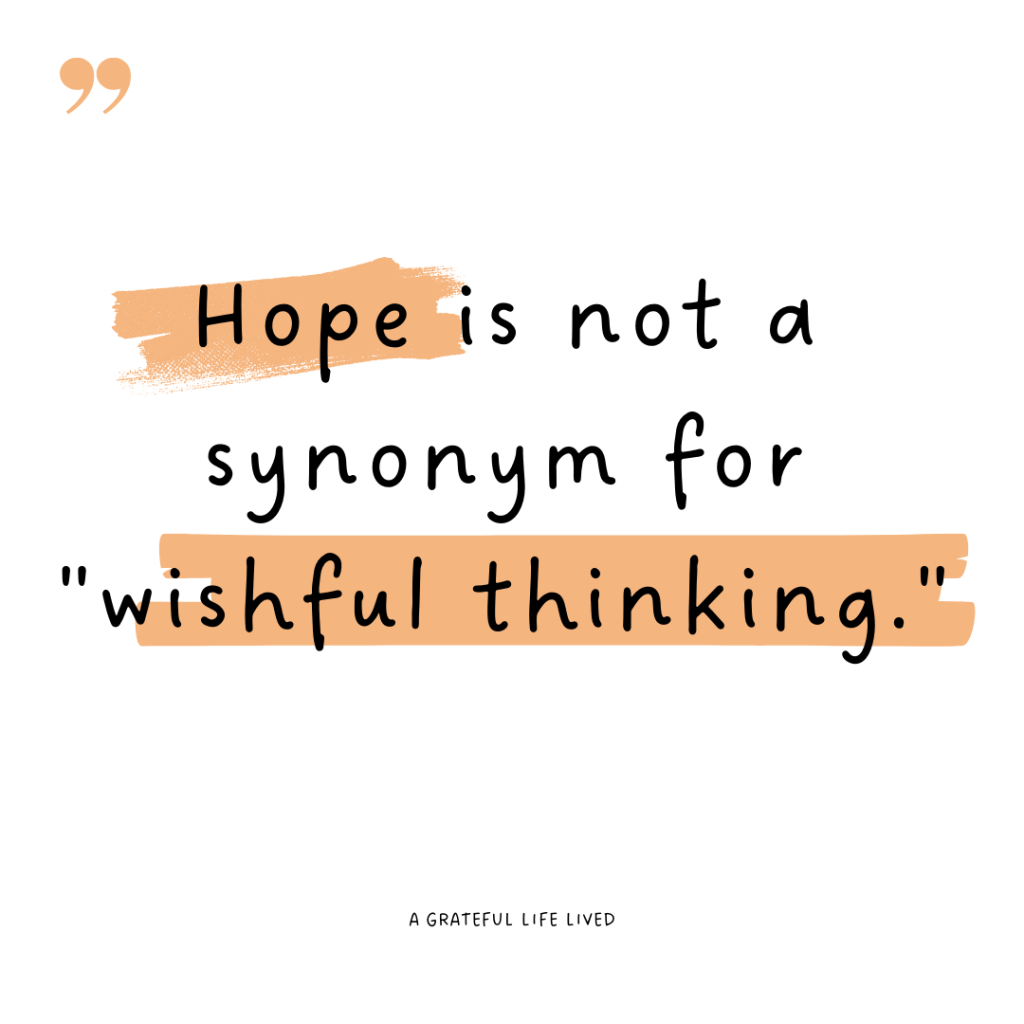
Hope is not a synonym for “wishful thinking.” Wishes, while cute, are that stuff of fairytales. We have something better—the waypower and willpower to enact change. We have agency and a belief that are not merely emotional, but rather: they reflect a way of thinking.
Hope is rooted in reality with an eye on the horizon, and “it allows people to envision and imagine a better future, which can bring feelings of positivity and optimism” (Hope Rising).
I can tell you that eating disorders are horrendous (they are) or that the brain needs a lot of time to heal (it does). But amplifying fear doesn’t bring awareness; it incites panic. And eating disorders thrive in panic.
So instead, I propose we leave space for the severity of struggle and we keep it in its lane. I propose we open the dialogue to include forward trajectory. Hope.
As I engage with the media of national eating disorder awareness week, I’m doing so with both heaviness and hope. With empathy. With caution. May you do the same, in whatever capacity is best for you. But above all: don’t lose that hope. If we aren’t grounded, we tend to tread heavy and deepen wounds. Hope—true, gospel hope—reverberates with humility and honesty; it draws others toward healing rather than sentiments such as, “Oh wow, he/she is so brave.”
Actions Steps
I hesitated labeling this section “action steps.” As a productivity-minded individual, I understand how unhelpful it is to build neck-high to-do lists. But if you read on, you’ll see that these ten tips are less action-oriented and more heart-oriented. After all (and above all), I believe in a powerful God who changes us from the inside out.
Without further ado, some ways you can orient your heart this week. . .
- Reflect on your relationship with food and your body. Make a goal for 2024 that reflects some ways you need to grow in seeing your body/food as good.
- Consider how you can celebrate body diversity in daily life (Ex. Read books/articles from people whose experience in their body differs from your own; unfollow brands/accounts that only feature the current, trendy ideal of beauty])
- Donate or sell old clothing that doesn’t serve you anymore
- Look up what God says about food and about your body (helpful resource)
- Think through some of the messages you’ve recently received about different foods being good or bad; consider how you felt after receiving those messages.
- Think of a few things you love about yourself that have nothing to do with how you look
- Practice giving compliments that aren’t related to achievement or appearance
- Imagine what it would be like if food wasn’t good or bad. Would you eat differently?
- Research “beauty standards through history” to see how short-lived our perception of “perfect” truly is (note: the linked video may be triggering to some)
- Look into visiting a local support group (many places also offer support groups for those who have a loved one in recovery)


I hope these words (and fun little graphics) are encouraging to you. If your head and heart resonate with the struggles I’ve mentioned here, please seek professional help. You can even dial 888-375-7767 to reach the hotline at the National Association for Anorexia and Associated Disorders (ANAD). If you are in a crisis, please call or text 988 for support.
Retain Your Hope,
Han
 A Grateful Life Lived
Leave a comment